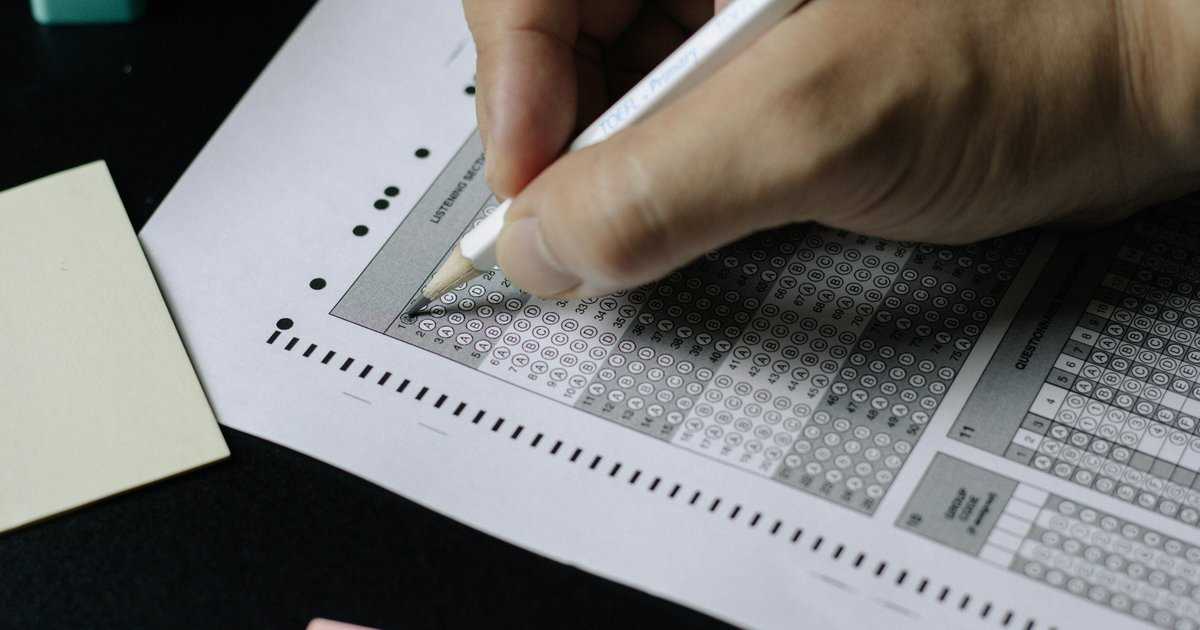
Stanford-Binet 5th Edition (SB5): Overview and PDF Guide
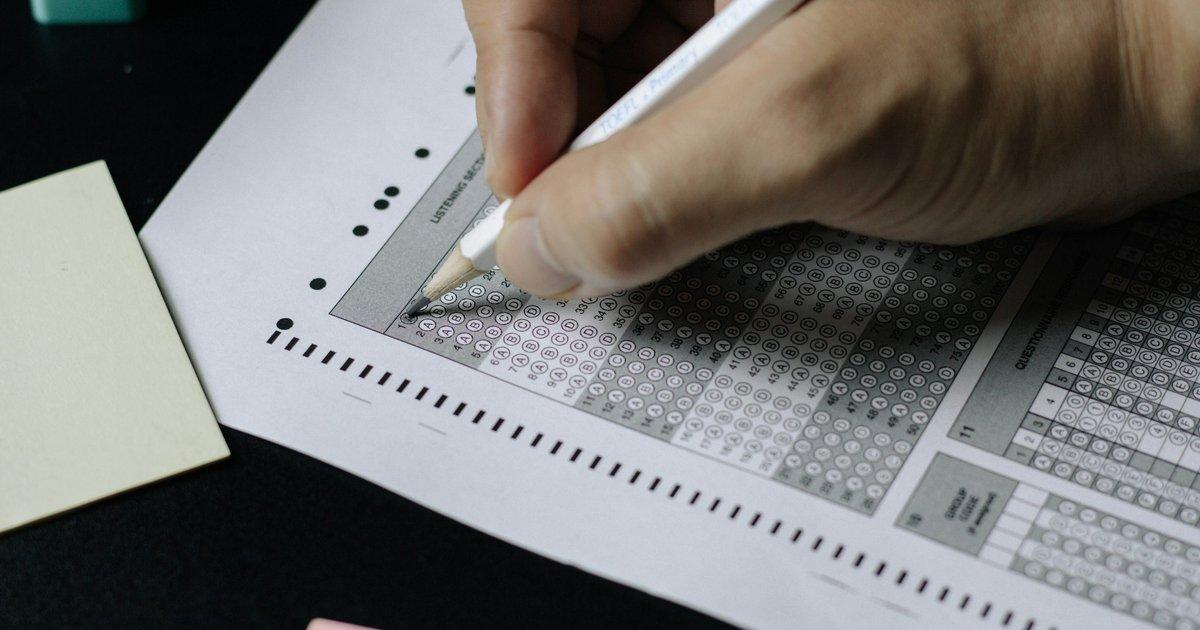
You searched for the Stanford-Binet 5th Edition and added "PDF" to it, so you probably want to see the test itself, read the manual, or find out whether you can take it at home. Fair enough. The honest answer comes in two parts: what the test is, and why a downloadable file is not the test.
The Stanford-Binet Intelligence Scales, Fifth Edition, usually shortened to SB5, was published in 2003 and written by Gale Roid. It is an individually administered clinical IQ test that measures five cognitive factors across both verbal and nonverbal tasks. It is built to be given by a trained examiner, not downloaded and self-scored. Below is how it is organized, how it differs from earlier editions, and what to do if what you really want is a score.

What Is the Stanford-Binet 5th Edition (SB5)?
The SB5 is the fifth edition of one of the oldest intelligence tests still in clinical use. It was released in 2003 by Gale Roid and is given one-on-one, with an examiner presenting tasks and recording your answers. It is not a quiz and it is not a worksheet. The examiner decides where to start, when to move on, and how to score borderline answers, which is a large part of why the results are trusted.
Here are the basic facts, based on the Wikipedia overview of the Stanford-Binet scales.
| Feature | SB5 |
|---|---|
| Year published | 2003 |
| Author | Gale Roid |
| Format | Individually administered by an examiner |
| Age range | From age 2 (no upper limit stated in the source) |
| Cognitive factors | 5 |
| Subtests | 10 |
| Domains | Verbal and nonverbal |
| Typical testing time | About 15 minutes to 1 hour 15 minutes, depending on age and ability |
The wide age range is the feature that sets the SB5 apart. Many other major test batteries come in separate versions for preschoolers, school-age children, and adults. The SB5 aims to cover the whole span with one framework, which helps when a clinician wants to compare one person's scores across different stages of life.
One caution: publishers update norms and kits over time, so check the publisher's current catalog before treating any detail, such as the upper age limit, as final. Sources describe that upper end slightly differently.
How the SB5 Is Organized: Five Factors, Two Domains
The SB5 sorts mental abilities into five factors and measures each one in both a verbal and a nonverbal way. That grid of five factors by two domains is where its ten subtests come from.
The five factors are:
- Fluid Reasoning. Solving new problems and spotting rules without relying on learned facts.
- Knowledge. What a person has picked up from school, reading, and everyday life.
- Quantitative Reasoning. Working with numbers and numerical relationships.
- Visual-Spatial Processing. Seeing how shapes and objects fit together.
- Working Memory. Holding information in mind while using it.
For each factor there is a verbal task and a nonverbal task. A nonverbal subtest asks for responses such as pointing or assembling materials, so a person with limited speech or language can still show what they can do. This is one practical reason clinicians may choose the SB5 for some young children and for people who have trouble with spoken language.
The results come out at several levels. Wikipedia lists four IQ composites, five factor indices, and ten subtest scores. In plain terms, you get an overall picture and a breakdown showing where someone is stronger or weaker. A profile with a big gap between two factors often tells an evaluator more than the overall number does.
From Binet to SB5: A Short Edition History
The Stanford-Binet traces back to the Binet-Simon test of 1905, one of the first practical intelligence tests. Alfred Binet and Théodore Simon created it to identify schoolchildren who needed extra help. Each later edition changed the scoring method, the norms, and the structure.
| Year | Edition | Author(s) |
|---|---|---|
| 1905 | Binet-Simon test | Binet and Simon |
| 1916 | First Stanford-Binet | Lewis Terman |
| 1937 | Second edition | Terman and Merrill |
| 1960 | Third edition (Form L-M) | Merrill |
| 1986 | Fourth edition (SB4) | Thorndike, Hagen, and Sattler |
| 2003 | Fifth edition (SB5) | Roid |
If you are reading an older study or a vintage PDF, check which edition it describes. Scores from the 1916 or 1960 versions were produced under different rules than the SB5, so a score from one edition should not be set next to a score from another without a conversion. For the wider story of how testing evolved, see the history guide below.

Ready to discover your IQ?
Take our scientifically designed test and get your score in just a few minutes.
The PDF Question: What You Can and Can't Find
A PDF can tell you about the SB5, but it cannot give you an SB5 score. There are really three kinds of file people are looking for, and they differ a lot.
- Overview or summary documents. Fact sheets, textbook chapters, and academic summaries explaining the structure and purpose of the test. These are fine for learning and are the safest thing to download.
- Test manuals and score interpretation guides. These are commercial, copyrighted publications sold to qualified professionals. Copies floating around the internet are unofficial, may be outdated, and are not meant for the general public.
- Item sets and "the real test" files. Be skeptical of any file claiming to be a complete SB5 you can take yourself. The real kit includes physical materials, an examiner's script, and norm tables. A scanned page or a quiz labeled "Stanford-Binet" cannot reproduce that.
There is also a practical reason not to chase leaked items. The SB5 assumes you meet the tasks for the first time, so a clinician can be confident the answers reflect ability rather than memorized content. Seeing items in advance undermines that, which is one reason publishers restrict access.
Even a perfect copy of the materials would not be enough, because the score depends on the examiner. A trained professional follows standardized rules for starting points, stopping points, and scoring, then converts raw results to standard scores using age-based norms. Without that process, you would have a set of puzzles, not an IQ.

How to Get a Real SB5 Score
Book an assessment with a licensed psychologist or another qualified examiner. Here is how that typically goes:
- Decide why you want the score. A school placement, a clinical question, and a membership application can each call for a different test.
- Ask which test they use. Many psychologists use the Wechsler scales; the SB5 is another established option. Ask whether it is available, or whether another test suits your goal better.
- Arrange the session. The test itself is one-on-one and, as noted above, can run from about 15 minutes to over an hour, depending on age and ability.
- Ask for a written report. A good report explains the factor scores and what they mean, not just a single number.
If your goal is a Mensa application, check the accepted-test list first. American Mensa's qualifying-scores page lists the Stanford-Binet 5 with a qualifying score of IQ 130 at the time of writing. Requirements can change, so confirm on Mensa's own page before booking anything.
Where an Online Test Fits In
If you only want a rough sense of where you stand, an online test is the practical option, as long as you treat it as an estimate. It is not a Stanford-Binet, it is not administered by an examiner, and it cannot be used as a clinical result or as proof for a society.
What it can do is give you a private, fast benchmark with no appointment. That can help you decide whether a formal assessment is worth the time and cost. Think of it as a first step, not a substitute. Our own test works this way: it is a benchmark for curiosity and self-checking, not a diagnosis, and it is not an official Stanford-Binet.
Frequently Asked Questions
Q: What is the Stanford-Binet 5th Edition?
A: It is a clinical IQ test published in 2003 by Gale Roid. The SB5 measures five cognitive factors, Fluid Reasoning, Knowledge, Quantitative Reasoning, Visual-Spatial Processing, and Working Memory, using ten subtests across verbal and nonverbal domains. A trained examiner gives it one-on-one.
Q: Can I download the SB5 as a PDF and take it at home?
A: No, not in a way that gives a valid score. Overview documents are easy to find, but the real test needs an examiner, physical materials, and age-based norm tables. Manuals are commercial publications for qualified professionals, and unofficial copies may be outdated or incomplete.
Q: How long does the SB5 take?
A: About 15 minutes to 1 hour 15 minutes. The time depends on the person's age and ability, since the examiner decides where to start and stop. Scoring and a written report come afterward, so the full process takes longer than the session itself.
Q: Does Mensa accept the Stanford-Binet 5?
A: Yes, American Mensa lists the Stanford-Binet 5 as an accepted test with a qualifying score of IQ 130. Check Mensa's current qualifying-scores page before you book, because requirements and accepted tests can change.
Q: Is an online Stanford-Binet test the same as the real SB5?
A: No. Online quizzes that use the Stanford-Binet name are not the clinical test and cannot be scored against its norms. They can give a rough estimate out of curiosity, but only a supervised assessment produces an official SB5 result.
References
- Stanford-Binet Intelligence Scales (Wikipedia)
- Qualifying Test Scores for Mensa Membership (American Mensa)
Last updated: November 21, 2026
Ready to discover your IQ?
Take our scientifically designed test and get your score in just a few minutes.
